Case Study – NHS OSCE Training
March 11, 2025 2025-04-20 14:02Case Study – NHS OSCE Training
Case
Study
NHS OSCE Training
Background
Betsi Cadwaladr University Health Board (BCUHB), located in Wales, has been dedicated to ensuring high standards in patient care by recruiting and training international nurses. The Board faced challenges in preparing overseas nurses for the Objective Structured Clinical Examination (OSCE), a mandatory requirement for obtaining Nursing and Midwifery Council (NMC) registration in the UK. To streamline and enhance the OSCE training process, BCUHB collaborated with Mentor Merlin, a leading provider of CPD-accredited OSCE training programs.
What led BCUHB to Mentor Merlin ?
- Training Structure Limitations: Previously, nurses underwent training programs that detached them from their work environment, causing delays in acclimatization to their roles within the Trust.
- Logistical and Scheduling Difficulties: The need for offsite residential training programs resulted in travel and accommodation complexities for newly recruited nurses.
- Lack of Integrated Learning: There was a need for a more blended approach combining theoretical knowledge with hands-on practical training.
Resource Constraints: The Health Board required a training provider that could supply comprehensive learning materials and structured training within a flexible framework.
To address these challenges, BCUHB partnered with Mentor Merlin, leveraging its well-structured, CPD-accredited OSCE training program. The key elements of this collaboration included:
1. Blended Learning Approach
Mentor Merlin's OSCE training follows a two-phase approach:
- Merlin Book of OSCE 2025: Comprehensive printed and digital study materials.
- Pre-Recorded Role-Play Videos: Step-by-step guides for each OSCE station.
- Live Discussion Sessions: Interactive mentor-led classes covering the syllabus over a structured 10-day schedule.
- Downloadable Study Materials: Additional resources to reinforce learning.
- WhatsApp Support & Premium Discussion Group: Candidates can engage with peers and mentors for real-time clarifications.
- Assignments from online Mentors: Candidates receive tasks for the day and feedback for the submission from online mentors to refine the preparation.
- Structured Onsite Preparation: A five-day intensive training at Mentor Merlin’s OSCE training centers in Leeds, London and Northampton.
- Hands-on Skills Practice: Practical application of clinical skills in a simulated exam environment.
- Result Booster Sessions: A dedicated revision day (Day 6) before the actual exam to reinforce critical skills and exam techniques.
- Personalized Correction from Mentors: Candidates receive a detailed evaluation and tailored feedback to enhance their chances of passing.
2. Study Resources & Support
- Practice Kits: Access to all the equipment for practicing skills.
- Mentorship Support: Personalized guidance from experienced OSCE trainers, including step-by-step action plans.
- Flexible Learning Options: Nurses could attend different training batches based on availability, ensuring minimal disruptions to their work schedules.
- Rescheduling & Backup Plans: Mentor Merlin worked closely with BCUHB to reschedule affected candidates due to unforeseen circumstances, ensuring no disruptions to their registration process.
3. Administrative & Logistical Support
- Exam Booking Assistance: Mentor Merlin facilitated OSCE exam scheduling, reducing administrative burdens on BCUHB.
- Accommodation Assistance: For Northampton-based training, nurses received guidance on accommodation arrangements.
- Regular Progress Monitoring: BCUHB and Mentor Merlin maintained open communication through dedicated project managers to track training progress and address any concerns.
- Emergency Response Coordination: In cases of last-minute disruptions, Mentor Merlin and BCUHB collaborated to secure alternative arrangements.
Impact of the Collaboration
Aspiring nurses enrolled in Mentor Merlin’s specialized OSCE program embark on a structured journey towards 100% success, guided by expert training and personalized support. With each passing cohort, Mentor Merlin consistently refined the approach, ensuring that the candidates receive the most up-to-date knowledge, focused mentoring, and hands-on practice.
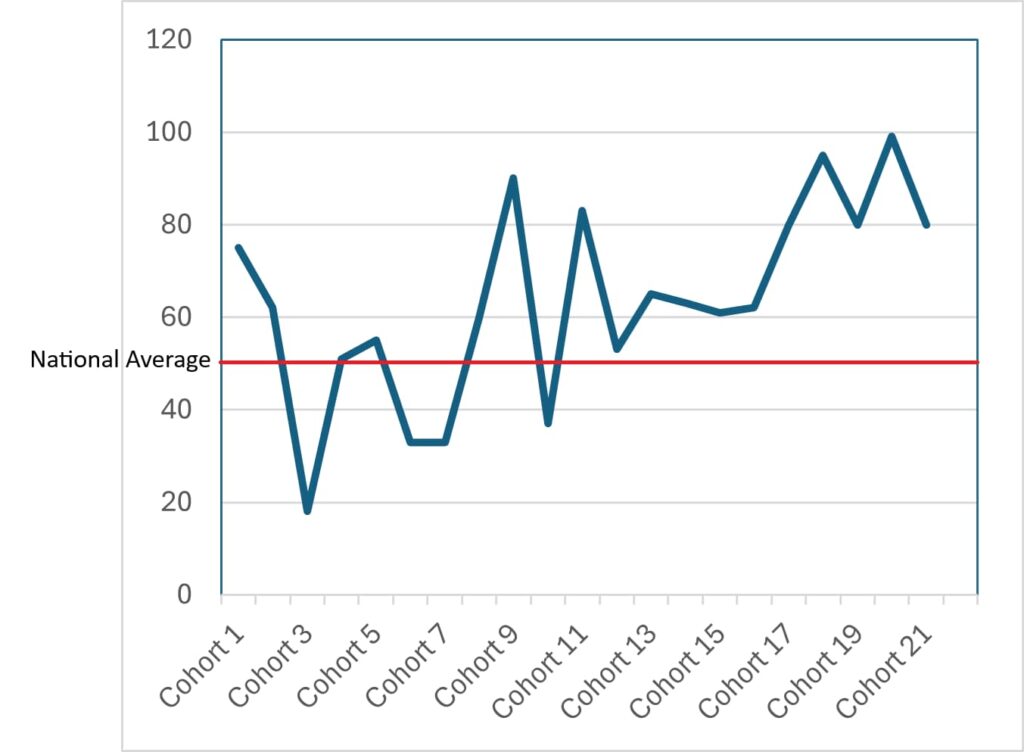
To date, out of 252 Cohort candidates, 153 of them successfully passed on their first attempt, demonstrating that more than half of the candidates achieved success in their first go itself, this consistent track record reflects the effectiveness of the training model. After each result, Mentor Merlin analyze performance, prepare detailed reports, and introduce new training strategies to further enhance outcomes.
The unwavering commitment to continuous improvement has played a key role in enhancing outcomes, enabling each batch to achieve better results than the previous one. This remarkable progress is a testament to the dedicated efforts of Mentor Merlin’s team and the perseverance of BCUHB candidates, making success not just a possibility – but a promise.
Increased First-Attempt Pass Rates
A structured training approach led to a higher success rate among candidates taking the OSCE for the first time. After Cohort 10, none of the cohort pass percentage went below 50%. And for the last 5 cohorts the pass percentage was above 80%. Whereas the *National Average for First attempt OSCE Pass Percentage remains just above 40% according to the UK NMC official website.
https://www.nmc.org.uk/registration/joining-the-register/toc/pass-rates-and-candidate-numbers/2024/
Future Collaboration
The successful integration of Mentor Merlin’s OSCE training model has led to multiple hospitals and care homes entrusting their international nurses for OSCE training. This growing collaboration reflects the trust and confidence placed in the structured training approach, which ensures a seamless transition for overseas nurses into the UK healthcare system while upholding the highest training standards.
By providing comprehensive, tailored support, this partnership is set to significantly enhance training efficiency and boost the preparedness of the healthcare workforce in the coming years, contributing to a more skilled and confident nursing community.